Why Every Dog Owner Should Know About Lungworm
Whether you’re exploring woodland trails, enjoying days at the beach or simply spending more time in the garden, summer is one of the best times of year to enjoy life with your dog.
Unfortunately, warmer weather can also increase exposure to parasites, including lungworm in dogs (Angiostrongylus vasorum).
While many dog owners have heard of lungworm, there are still plenty of misconceptions about how dogs become infected, what symptoms to look for, and when veterinary investigation may be needed.
One of the most common myths is that a dog has to eat a slug or snail to get lungworm. In reality, it’s not always that straightforward.
This guide explains what lungworm in dogs actually means, how dogs may become exposed, the signs to look out for, and how veterinary surgeons investigate suspected infection.
Our aim is to provide clear, practical information to help you make informed decisions about your dog’s health.
What is Lungworm?
Lungworm in dogs (Angiostrongylus vasorum) is a parasitic worm that can infect dogs and other canids. Adult worms primarily affect the blood vessels supplying the lungs, although infection can also have wider effects on the body.
The severity of infection varies between dogs. Some may develop only mild or vague symptoms initially, while others can become seriously ill.
Because many of the signs are similar to those seen with other illnesses, lungworm in dogs cannot be diagnosed based on symptoms alone. If lungworm is suspected, your veterinary surgeon may recommend further investigation.
Where is Lungworm Found?
Lungworm has been identified throughout much of the UK and is no longer limited to a few isolated areas.
Cases have become increasingly recognised over recent years, with infections reported in both urban and rural locations.
Dogs that regularly visit parks, woodland, gardens or areas where slugs, snails and foxes are present may have opportunities for exposure, although lungworm can affect dogs of any breed, age or lifestyle.
How Do Dogs Get Lungworm?
One of the biggest misconceptions surrounding lungworm in dogs is that they must eat a slug or snail to become infected.
That’s not always the case.
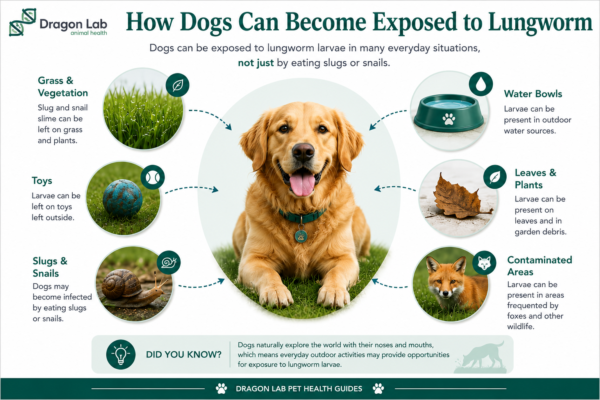
Dogs may become exposed to lungworm larvae through contact with infected slug or snail slime left on:
 Grass and vegetation
- Outdoor water bowls
- Toys left in the garden
- Leaves and plants
- Areas where foxes are present
 Grass and vegetation
 Outdoor water bowls
 Toys left in the garden
 Leaves and plants
 Areas where foxes are present
Dogs naturally investigate the world using their noses and mouths, meaning everyday outdoor activities may provide opportunities for exposure.
While swallowing an infected slug or snail is one recognised route of infection, it is not the only possible way exposure can occur.
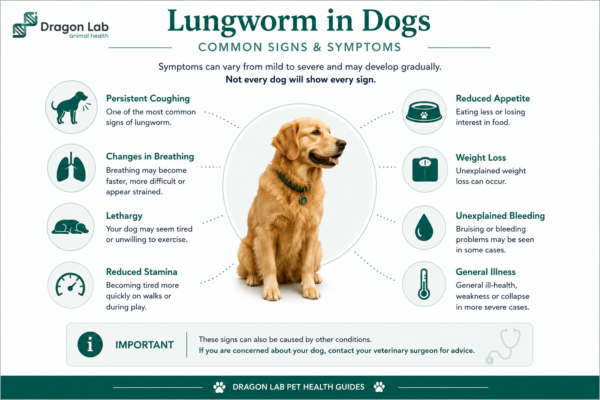
The symptoms of lungworm in dogs can vary considerably and often resemble those of other illnesses.
Some of the more commonly reported signs include:
- Persistent coughing
- Becoming tired more quickly on walks
- Changes in breathing
- Reduced appetite
- Weight loss
- Lethargy
- Unexplained bleeding or bruising
- General illness
Not every dog will develop every symptom, and some dogs may initially show only subtle changes.
If your dog develops any of these signs, or simply doesn’t seem quite themselves, it’s important to contact your veterinary surgeon for advice.
Watch For
 Watch For
Persistent coughing, changes in breathing, unexplained tiredness or a dog that simply does not seem themselves should always be discussed with your veterinary surgeon.
Myth vs Fact
 Myth Myth |  Fact Fact |
|---|---|
| Dogs only get lungworm by eating slugs or snails. | Dogs may also be exposed through slug or snail slime on grass, toys, plants and outdoor water bowls. |
| Only puppies get lungworm. | Dogs of all ages and breeds can become infected. |
| A cough always means kennel cough. | Coughing has many possible causes, including lungworm. Your vet can investigate the underlying cause. |
| All worming products protect against lungworm. | Not every parasite prevention product includes lungworm cover. Ask your vet which product is appropriate for your dog. |
| Healthy-looking dogs can’t have lungworm. | Early signs can be subtle and are sometimes easy to overlook. |
How is Lungworm in dogs Diagnosed?

Because the symptoms of lungworm in dogs are not specific to the disease, your veterinary surgeon will assess your dog’s clinical signs, medical history and physical examination before deciding whether additional testing is appropriate.
Depending on the individual case, your vet may recommend laboratory testing as part of their investigation.
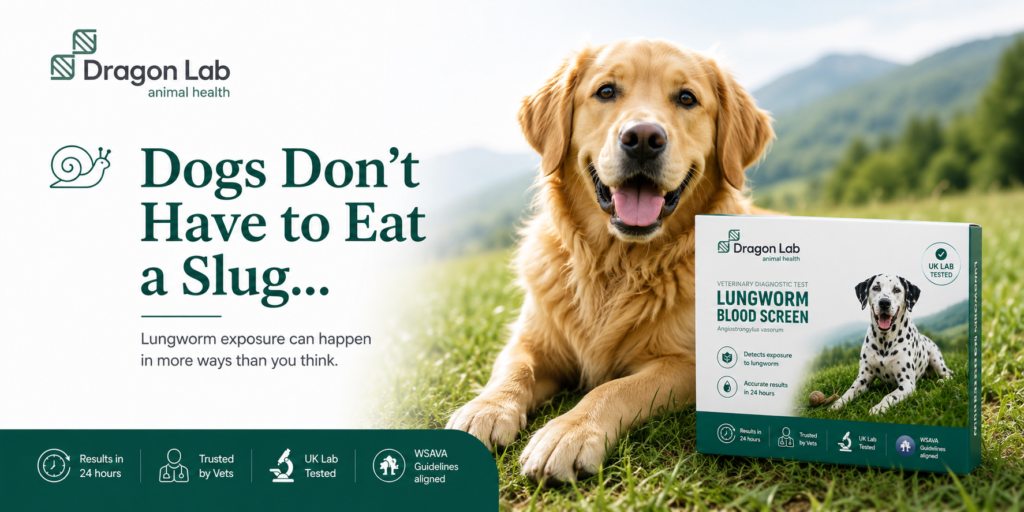
The Dragon Lab Lungworm Blood Screen is a laboratory blood test designed to support veterinary investigation where lungworm infection is suspected or if your want peace of mind that your dog is not harbouring a lungworm infection.
Results should always be interpreted alongside your dog’s clinical signs and your veterinary surgeon’s professional assessment.
Dragon Lab Tip
 Dragon Lab Tip
The Lungworm Blood Screen is a laboratory blood test designed to support your veterinary surgeon when investigating possible lungworm infection. Or if you want peace of mind that your et is not harbouring an asymptomatic infection (lungowrm without symptoms). Results should always be interpreted alongside clinical signs and your vet’s assessment.
Can Lungworm Be Prevented?
There are parasite prevention products available that include protection against lungworm in dogs, although not all routine worming treatments provide lungworm cover.
Your veterinary surgeon can advise on the most appropriate parasite prevention programme based on your dog’s age, lifestyle and risk factors.
Simple measures such as regularly cleaning outdoor water bowls, washing toys left outside and discouraging dogs from eating slugs or snails may also help reduce opportunities for exposure to lungworm in dogs.
Good Practice
 Good Practice
Wash outdoor toys regularly, refresh water bowls often and discourage dogs from eating or playing with slugs and snails where possible.
When Should I Contact My Vet?
Always seek veterinary advice if your dog develops:
- A persistent cough
- Difficulty breathing
- Unexplained tiredness
- Loss of appetite
- Unexplained bleeding
- Sudden illness or collapse
How Dragon Lab Can Help
At Dragon Lab Animal Health, we’re committed to supporting veterinary professionals and pet owners through reliable laboratory diagnostics.
Our Lungworm Blood Screen provides fast, dependable laboratory testing to support veterinary investigation where lungworm infection is suspected or if you just want peace of mind that your best friend is screened.
If you’re concerned about your dog’s health, always contact your veterinary surgeon for advice.